
I played puzzle chess for the first time at USA Jigsaw Nationals last month. It was so much fun! Here’s a quick intro to how to play it.
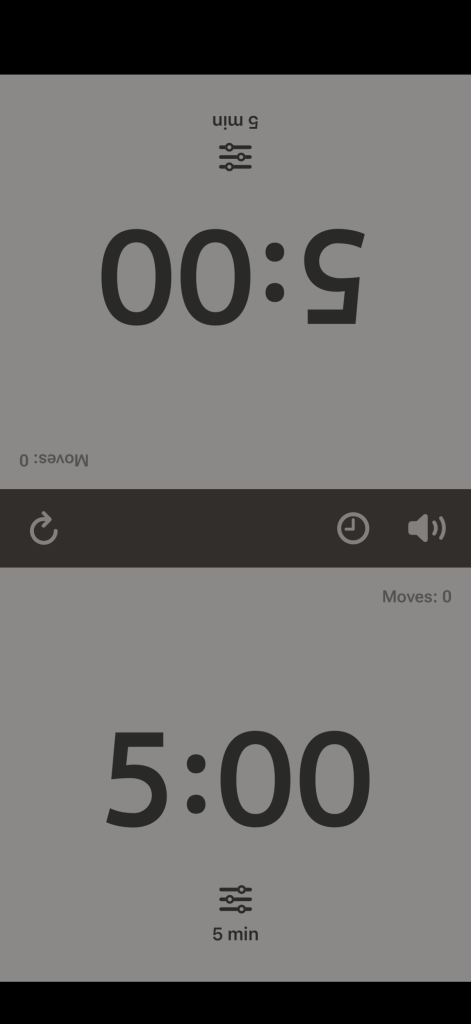
First, you need two people, one or more puzzles with low piece counts (100 to 200 are most common), and a chess clock. There are free chess clock apps for phones; I downloaded “ChessClock” for my iPhone. The screenshot below shows ChessClock ready for a puzzle chess game, with each person allocated five minutes for making their moves.
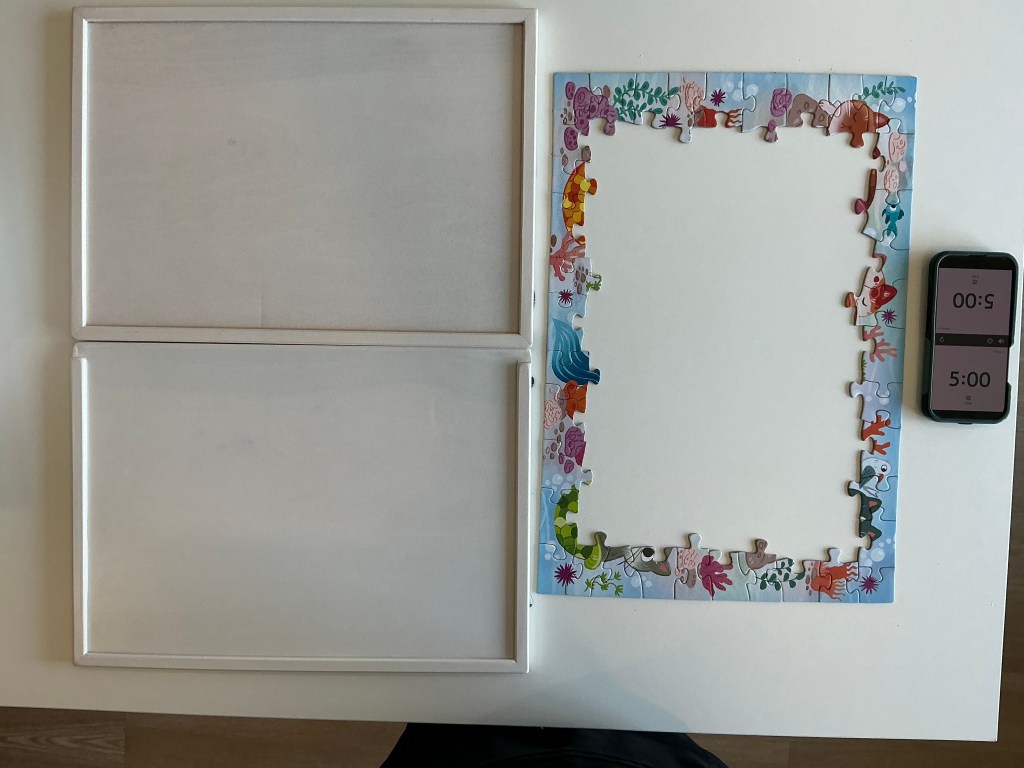
Next, the two players open the puzzle. Without any time restrictions, they flip up all the pieces, separate the edge pieces, and build the edge together. The other pieces can optionally be covered; in the picture below, the interior pieces are under the white wooden trays. And the box lid is displayed in a place that both players can see equally well.
At this point, the game can begin. The players uncover the interior pieces, and they look for a piece they can connect directly to what’s already been assembled. Whoever puts the first piece in then taps their half of the chess clock. That starts the other player’s clock counting down from five minutes. The other player puts in a piece connected to what’s already been assembled, then taps their half of the chess clock to stop their clock and start the other player’s.
The players go back and forth, each trying to put in a piece and tap their chess clock side as quickly as possible. A few notes:
- Only the player who’s currently looking for a piece can touch pieces and can only hold one piece.
- If a player picks up a piece but doesn’t connect it to the puzzle, the player should put the piece back as close to its original position as possible.
- Neither player should rearrange the loose pieces.
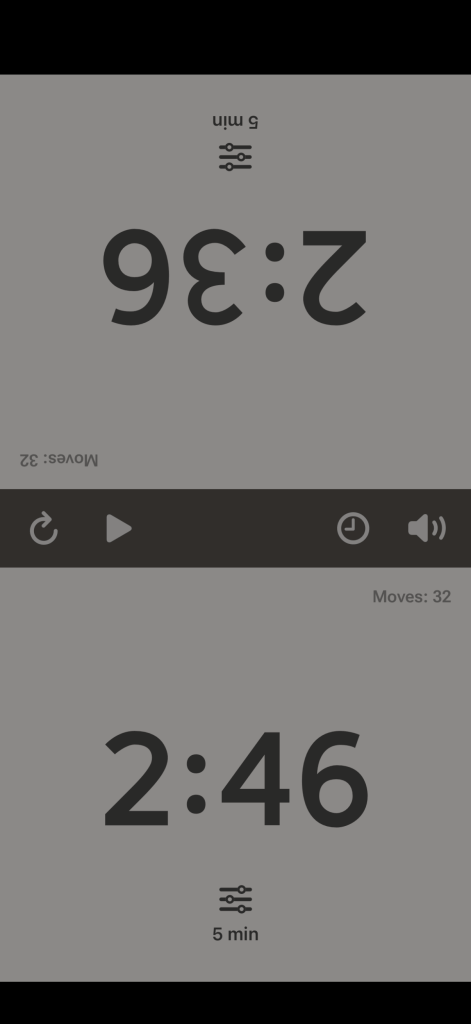
If one of the players runs out of time, that player has lost the game. If the players finish the puzzle, each with time left, the last player to put in a piece pauses the chess clock so both times are frozen. Whoever has the most time left is the winner. In the example below, the first player has 2 minutes 36 seconds left and the second player has 2 minutes 46 seconds left, so the second player is the winner.
Puzzle chess is a fundamentally different beast from regular casual or speed puzzling. I struggled with it at first because I kept seeing loose pieces that would fit together with each other, but that’s not permitted. I needed to find single pieces that would fit into what was already assembled. I tried to identify pieces in advance that I could connect, but remembering where all the pieces were and where in the puzzle each piece fit, and adapting my plan as the other player added to the puzzle was a LOT at first. Practice is highly recommended, but it’s so much fun whether you’re new or experienced. Give it a try!
 Puzzled.blog
Share your puzzled thoughts!